Boiler prices in Ontario (2026)
A new high-efficiency combi boiler typically costs $7,000 to $13,000 installed in Ontario, and a heating-only boiler $6,000 to $11,000, before 13% HST. Venting, the state of your old piping and what happens to your water heater decide where your quote lands.
Boiler replacement prices
Heating$6,000to$13,000
Typical installed price, Ontario 2026, all options shown
- Combi boilerhigh efficiency, heat and hot water $7,000 to $13,000
- Hydronic heating boilerboiler only $6,000 to $11,000
Installed price in Ontario, before 13% HST ($6,780 to $14,690 with HST). Replacement in an existing hot water heating system on natural gas; removal of the old boiler is often included.
On this page
Who has a boiler in Ontario
Most Ontario houses heat with forced air, but boilers are far from rare. Hot water radiators are common in houses built before about 1950 in the older parts of Toronto and Hamilton, where many systems began as coal-fired gravity systems and were later converted to gas with a pump. Big cast-iron radiators and wide basement pipes are the usual clues. Boilers also run in-floor radiant heat and baseboard convectors.
These prices are for hot water (hydronic) systems on natural gas; steam, oil and propane boilers need an in-home visit to price. To compare a boiler with a furnace or heat pump, the Ontario Furnace Prices index shows them on one scale. For local context, see our Toronto heating prices and Hamilton heating prices.
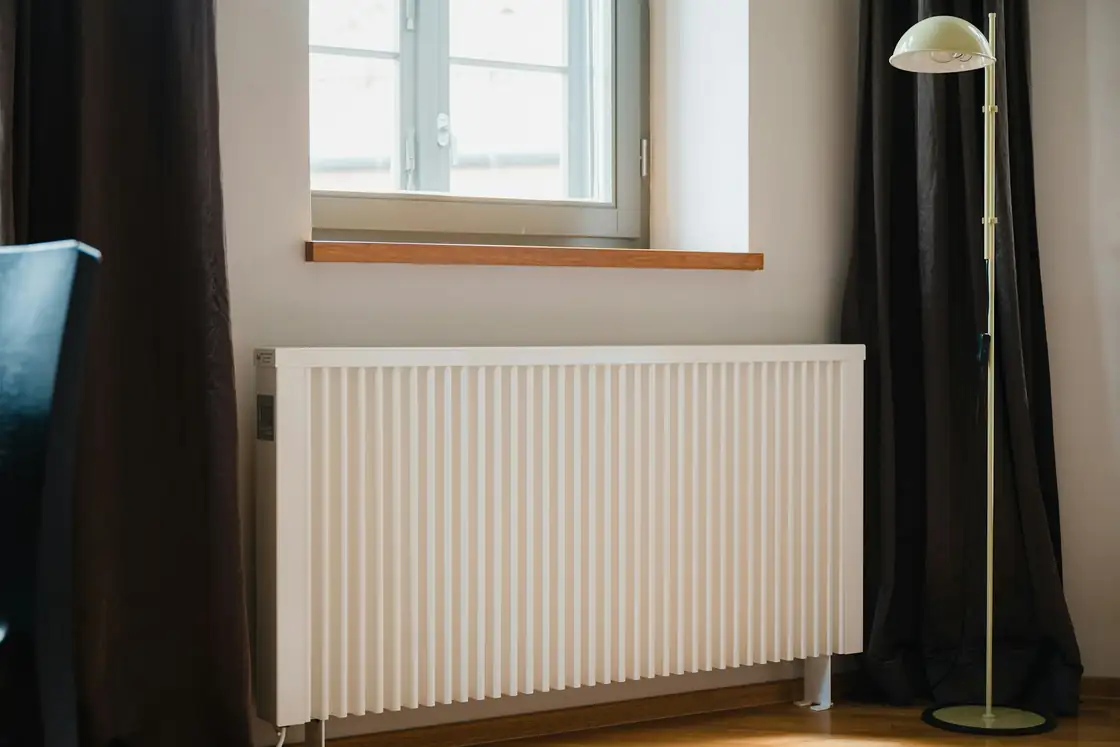
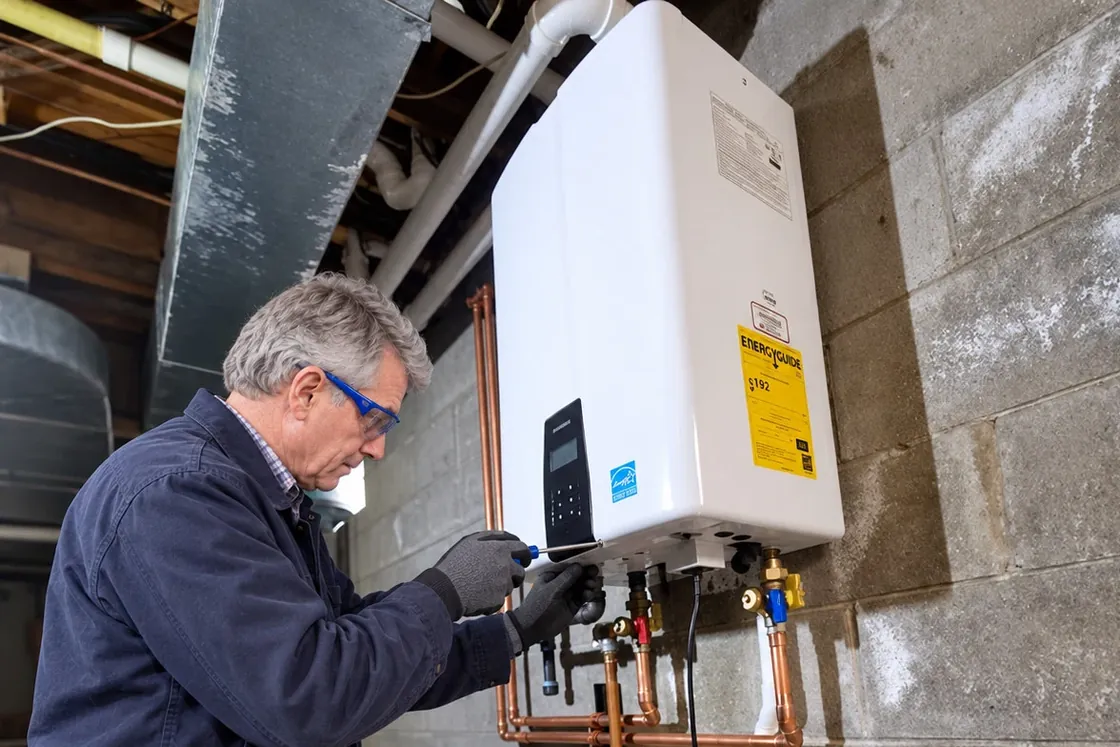
Combi or heating-only boiler
A combi boiler heats the house and, when a tap opens, heats domestic water on demand through a built-in plate heat exchanger: one appliance, one vent, no water heater to rent. A heating-only boiler does just the space heating. Hot water then comes from a separate water heater or an indirect tank, an insulated tank with a coil inside that the boiler heats like one more zone.
| What differs | Combi boiler | Heating-only boiler |
|---|---|---|
| Typical installed price | $7,000 to $13,000 | $6,000 to $11,000, plus the tank if you add one |
| Hot water | Made on demand, nothing stored | Stored in an indirect tank or a separate water heater |
| Hot water at the same time | One shower at a time in winter; two needs a larger model | A stored tank covers showers, a tub and laundry together |
| Space | Wall-hung, cupboard-sized | Boiler plus a floor-standing tank |
| Gas supply | The hot water side draws far more gas than a tank; the line may need upsizing | Usually fits the existing line |
| Best for | Smaller homes with one or two bathrooms | Larger homes, deep tubs, three or more bathrooms |
Typical installed ranges before 13% HST. An indirect tank is not in our reviewed price table, so ask for it as a separate line.
A practical test: if two people often shower at once on a January morning, or you fill a large soaker tub, choose a heating-only boiler with an indirect tank. Winter supply water in Ontario can be only a few degrees above freezing, so any on-demand heater delivers less hot water in January than in July.
What moves a boiler quote
-
Venting the new boiler
Can go either way: Short runs usually included
A condensing boiler vents through plastic pipe out a side wall or the roof, not the chimney. A short run is normally in the price; long runs, a roof exit or tight clearances from windows, doors and the gas meter add labour.
-
The water heater left on the chimney
Raises the price: +$300 to $1,500
A gas water heater that shared the chimney with the old boiler may not vent safely alone and needs a liner sized for it. A combi avoids this.
-
Flush, dirt separator and near-boiler piping
Raises the price: More labour, worth it
Modern heat exchangers clog on the sludge an old system carries. A proper job flushes the loop, adds a magnetic dirt separator and repipes around the boiler.
-
Zones and controls
Raises the price: $150 to $600 per thermostat
Each extra zone needs a zone valve or pump and a thermostat. An outdoor reset sensor belongs on every condensing boiler.
-
Gas line for a combi
Raises the price: +$300 to $1,200
A combi fires hard the moment a tap opens. If the pipe from the meter cannot carry that with the house running, it is upsized.
-
Condensate drain
Raises the price: +$150 to $350 for a pump
Acidic condensate runs through a neutralizer to a drain. No floor drain nearby means a pump.
-
Removing a cast-iron boiler
Can go either way: Often included, ask
Removal is often in the price, but a large sectional boiler in a tight basement can mean extra labour. Get it in writing.
-
A like-for-like swap
Lowers the price: Lowest quotes
A newer condensing boiler swapped for another, on piping and venting that already suit it, lands near the bottom of the range.
Condensing boilers and old radiators
A modern condensing boiler is rated 90% AFUE or higher, but only reaches it when the water returning from the radiators is cool enough, roughly below 54°C, for the water vapour in the exhaust to condense. Older atmospheric cast-iron boilers commonly run in the 60 to 80% range, which is where the gas savings come from.
That suits older homes. Big cast-iron radiators were sized for coal-era heat and drafty windows, so after insulation and window upgrades they can often heat the house with much cooler water. An outdoor reset control runs cool water on mild days and hotter water only in a cold snap.
Sizing matters as much as the brand. Old boilers are often far bigger than the house needs. A good installer calculates the heat loss room by room, the approach of CSA F280, the Canadian sizing standard, and measures the radiators instead of copying the old nameplate. An oversized boiler short-cycles, wears faster and rarely condenses.
What would your boiler swap cost?
Ranges are a starting point. A free in-home estimate looks at your radiators, venting and water heater and turns them into a written price.
Free, no obligation. About a minute to request.
Flushing, piping and removal
Old systems carry sludge and rust scale that a cast-iron boiler shrugged off and a modern heat exchanger does not. A serious quote lists a system flush, a magnetic dirt separator, an air separator, a new expansion tank and piping that keeps boiler flow separate from system flow, using closely spaced tees or a hydraulic separator. Skipping these looks cheaper on paper, and a dirty system is a common reason a new boiler struggles early.
The old boiler can weigh well over 150 kg and is usually broken into sections to carry out. That labour is often included; confirm it.
Old insulation on boilers and pipes
White or grey wrap on old boilers and heating pipes can contain asbestos. Have it tested before demolition. If it is positive, an abatement contractor removes it, priced separately from the boiler.
The water heater left behind
In many older homes the boiler and a gas water heater share one masonry chimney. Once a condensing boiler vents out the wall, the water heater is alone in a flue sized for two: it stays cool, drafts weakly and condensation attacks the masonry. The fix is a chimney liner sized for the water heater ($300 to $1,500), a power-vent water heater, or a combi boiler that retires the water heater. Our water heater prices guide compares the options.
A worked example
Take a 1920s semi in central Toronto with cast-iron radiators, a 40-year-old boiler and a rented gas tank water heater on the same chimney. Two reasonable quotes could look like this:
| Scope | Option A: heating-only boiler | Option B: combi boiler |
|---|---|---|
| Boiler, installed | $6,000 to $11,000 | $7,000 to $13,000 |
| Water heater | Keeps the rented tank; chimney liner $300 to $1,500 | Rental tank returned, no liner needed |
| Gas line | Usually unchanged | May need upsizing, $300 to $1,200 |
| Typical total before HST | $6,300 to $12,500 | $7,000 to $14,200 |
| After the job | Rental charges continue | No water heater to rent |
Totals add our typical ranges; the low end of Option B assumes the gas line is fine. Flushing and near-boiler piping belong in both quotes.
Option B costs more upfront but ends the monthly rental charge, so the gap narrows every year. Option A suits a bigger household that needs stored hot water, especially if the rented tank is later swapped for an indirect tank.
Cooling a house with radiators
Boiler homes have no ducts, so central air is not a simple add-on. The usual answer is a ductless mini-split: typically $3,500 to $6,500 installed for a single zone and $9,000 to $18,000 for three to five indoor heads. A mini-split is a heat pump, so it also heats in spring and fall and lets the boiler rest on mild days. Small-duct high-velocity systems are another option and need an in-home survey to price. See ductless mini-split prices for zone counts and sizing.
A ductless heat pump can qualify under the Home Renovation Savings heat pump stream when the product, the home and the paperwork meet the rules, with approval required before installation. A gas boiler on its own is not a heat pump measure. Programs change, so confirm before you buy; our heat pump rebates guide has the details.
Sources
- Home Renovation Savings: heat pumps checked October 4, 2026
- Home Renovation Savings: terms and requirements checked October 4, 2026
Repair or replace?
One leaking valve or a failed circulator pump is a repair. These signs point toward replacement:
- The boiler is cast iron, 25 years old or more, and needs a major part.
- A section or the heat exchanger leaks, or you add water to the system more and more often.
- The pressure relief valve drips or discharges again and again.
- Rooms heat unevenly even after bleeding the radiators and balancing the system.
- A technician finds a cracked section, flue problems or scorching around the burner.
Questions to ask before you sign
- Did you calculate the heat loss and measure the radiators, or size from the old boiler?
- Is a system flush, a dirt separator and new near-boiler piping included?
- Where will the vent exit, and what happens to the water heater on the chimney?
- Is removal of the old boiler included, and has the old insulation been checked for asbestos?
- Are you a TSSA-registered gas contractor, and what is your registration number?
Questions people ask
How long does a boiler last?
Old cast-iron boilers often run 25 to 35 years or more, which is why many Ontario homes still have one from the 1970s or 1980s. Modern condensing boilers are more efficient but have narrower heat exchangers; with yearly service and clean system water, expect roughly 15 to 20 years. Skipping the annual cleaning shortens that.
Can I replace my boiler with a furnace and central air?
Yes, but it means running ductwork through a finished house, opening walls, ceilings and closets, on top of the equipment price. It is usually the more disruptive and more expensive route, so many owners of radiator homes keep hot water heat and add ductless mini-splits for cooling. If you are weighing the switch, compare furnace and AC prices.
Is a combi boiler enough for a house with two bathrooms?
Usually, as long as both bathrooms are not in use at the same moment. A typical combi handles one shower comfortably in winter, when incoming water is coldest; two at once needs a larger model and low-flow fixtures. If your household regularly overlaps showers, laundry and the dishwasher, a heating-only boiler with an indirect tank gives you a stored reserve.
How long does a boiler replacement take?
A straightforward swap with reusable piping and venting commonly takes one to two days, with the heat off for part of that time. Allow longer for a full repipe near the boiler, a new vent route, extra zones or asbestos abatement, which must happen before the old boiler comes out. If your old boiler still runs, avoid the coldest weeks.