Furnace prices in Toronto
A standard gas furnace replacement in Toronto typically costs $4,300 to $7,000 installed, before 13% HST, about 8% above the Ontario range. Parking, tight access and older houses explain most of the gap, and they weigh more downtown than in Scarborough or Etobicoke.
Typical Toronto furnace replacement
Heating$4,300to$7,000
Typical installed price, Toronto 2026
- Low end
- $4,300
- Midpoint
- $5,650
- High end
- $7,000
Before 13% HST ($4,859 to $7,910 with HST): the Ontario range of $4,000 to $6,500 raised about 8% for city access and labour.
On this page
Why Toronto quotes run higher
The furnace costs about the same in Toronto as in Barrie. What differs is the hours a crew spends getting it in, venting it and carrying the old one out.
-
Parking and unloading
Raises the price: Time on every job
On many downtown streets the van cannot park at the door, so paid parking and carrying equipment along the block add labour time.
-
Laneway-only access
Raises the price: Extra labour
Semis and row houses with no side yard mean equipment goes through the front hall or up a lane, and the old furnace leaves the same way.
-
Tight, low basements
Raises the price: Extra labour
Low ceilings, steep stairs and furnaces boxed in under the stairs slow every step.
-
The water heater left on the chimney
Raises the price: +$300 to $1,500
Once the furnace vents out the wall, a gas water heater alone in an old masonry chimney often needs a liner.
-
Permit and city labour rates
Raises the price: $75 to $300 permit
Toronto lists furnace replacement as a permit type, and wages, insurance and time lost in traffic cost more here.
Together these put a Toronto job roughly 8% above typical Ontario furnace prices: our estimate, not a surcharge.
City of Toronto
Toronto price snapshot
- Winter design temperature
- About -18°C downtown, a little colder in the former suburbs
- Typical homes
- Pre-war semis and row houses, post-war bungalows, condo townhouses
- Gas utility
- Enbridge Gas
- Electricity
- Toronto Hydro
- Permit
- Furnace and boiler swaps are a listed HVAC permit; the installer usually applies
Typical installed prices in Toronto, before HST
- Single-stage furnace$4,300 to $7,000
- Two-stage furnace$5,950 to $8,650
- Central AC$4,100 to $7,550
- Ducted heat pump$9,700 to $19,450
Ontario ranges raised about 8% for Toronto parking, access, permit and labour costs. A suburban bungalow can land near the provincial range; a downtown semi with lane access can sit at the top.
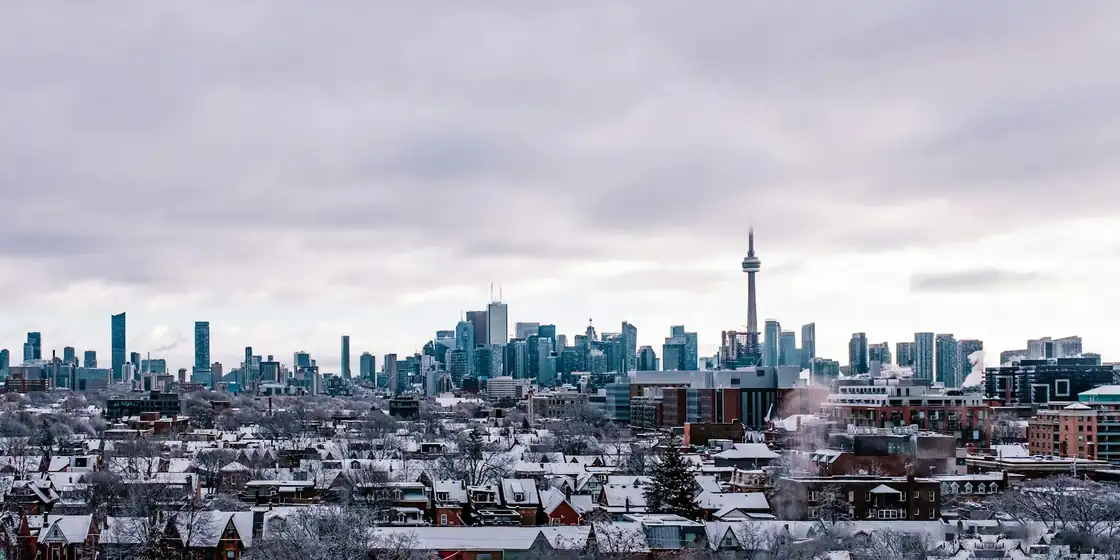
Radiator houses: boilers, and ductless for cooling
Plenty of pre-war houses in neighbourhoods such as the Annex, Riverdale and Roncesvalles still heat with hot water radiators, so you are pricing a boiler, not a furnace. Ducting a plaster-walled house is disruptive, so most owners keep hot water heat and add cooling separately.
| Option | Toronto typical | Ontario typical | Notes |
|---|---|---|---|
| Heating boiler | $6,500 to $11,900 | $6,000 to $11,000 | Keeps the radiators; hot water stays separate |
| Combi boiler | $7,550 to $14,050 | $7,000 to $13,000 | Heat and hot water in one; can end a rented tank |
| Mini-split, one zone | $3,800 to $7,000 | $3,500 to $6,500 | A hot top floor or one large room |
| Mini-split, 3 to 5 heads | $9,700 to $19,450 | $9,000 to $18,000 | Whole-house cooling, plus heat on mild days |
Before 13% HST. Toronto is the Ontario range plus about 8%.
A mini-split is a heat pump, so it also heats on mild days and lets the boiler rest. Hot third-floor rooms are where most people start. See boiler prices and ductless mini-split prices.
Semis and row houses: room for vents and the AC
Every new gas furnace is a condensing furnace venting through two plastic pipes out a wall. The gas code sets minimum clearances from windows, doors, air intakes and the gas meter, and in a narrow side yard between two semis, meeting them is often the hardest part of the job. Sometimes the vent goes out the back or the roof, adding hours, and the AC condenser lands in the back yard with a longer refrigerant line.
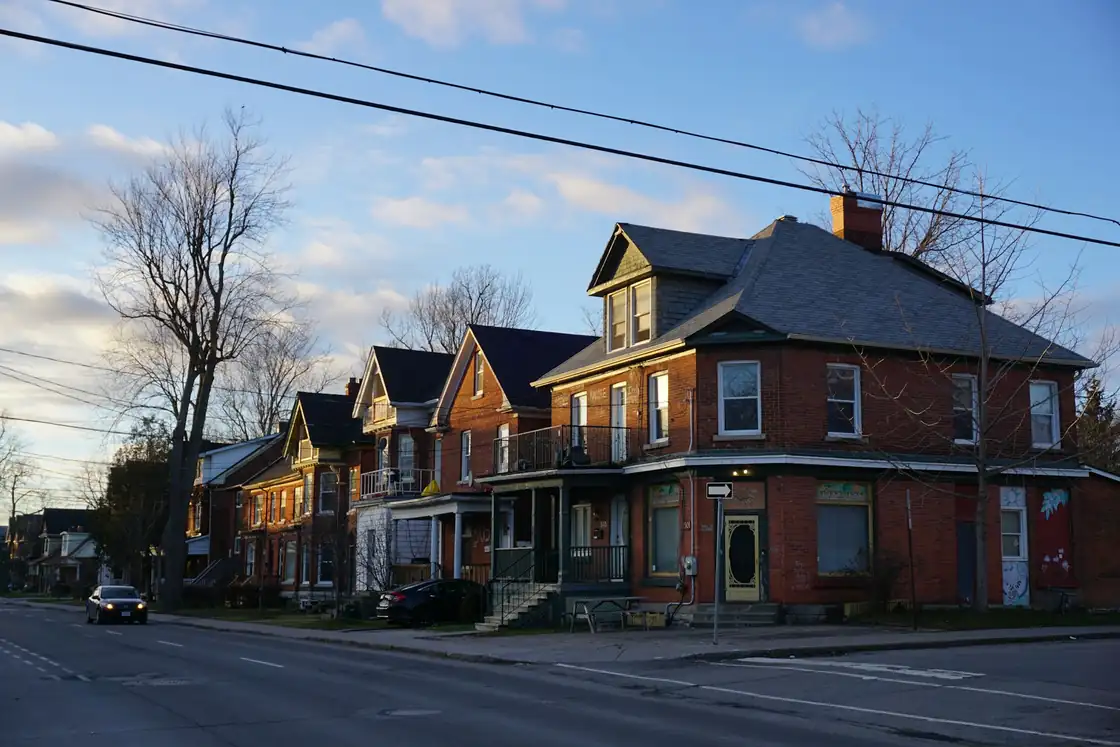
Toronto by area
The 8% is a city-wide estimate. Where you live inside Toronto moves it.
- Old Toronto
- Victorian and Edwardian semis and row houses, many on lanes; radiators, chimneys and tight basements. The highest quotes.
- East York and York
- Brick bungalows and semis from around the Second World War; compact basements, older chimneys.
- Etobicoke
- Post-war bungalows and split-levels inland, older lakeshore houses in Mimico and New Toronto.
- North York
- Post-war bungalows, many replaced by much larger new houses.
- Scarborough
- Bungalows, back-splits and townhouses, mostly with driveways: the easiest access in the city.
Big rebuilds size like large suburban houses (see Brampton furnace prices); for 1970s to 1990s houses, see Mississauga furnace prices.
Sizing for a Toronto winter
The Ontario Building Code design temperature for downtown Toronto is about -18°C, the cold the heating must hold against. Many old Toronto furnaces are bigger than needed, especially after new windows and insulation, so ask for a CSA F280 room-by-room calculation, not a copy of the old nameplate.
Price your Toronto house, not an average
A free in-home estimate checks the vent route, the basement and the access, then turns these ranges into a written price.
Free, no obligation. About a minute to request.
Condo townhouses
Stacked and back-to-back condo townhouses often have a compact furnace, or an air handler fed by a water heater, in a closet, with the condenser on a terrace or roof. Get the condo corporation's approval before touching an exterior wall or the roof. High-rise suites on building water loops fall outside these ranges.
Running costs and electrical work
Enbridge Gas supplies natural gas across Toronto and Toronto Hydro delivers the electricity; the heating cost calculator compares a furnace and a heat pump at your rates. For a heat pump, check the panel first, since many older houses still have a 60 or 100 amp service: wiring typically adds $500 to $2,500, a panel upgrade $2,000 to $4,500.
A heat pump, ducted or ductless, can qualify for a Home Renovation Savings rebate when the product, home and paperwork meet the rules and approval comes before installation; a gas furnace or boiler alone does not. Programs change, so confirm first; see the heat pump rebates guide.
Sources
- Home Renovation Savings: heat pumps checked October 4, 2026
- Home Renovation Savings: terms and requirements checked October 4, 2026
Permits and who does the work
Toronto Building lists furnace and boiler replacement among its stand-alone mechanical (HVAC) permit types for houses. The installer normally applies and puts the fee on the quote; if there is no permit line, ask why. Gas work in Ontario must be done by a TSSA-registered contractor, so ask for the registration number. Heat pump wiring needs a licensed electrical contractor and an ESA permit.
Questions people ask
Do I need a permit to replace a furnace in Toronto?
Expect one. Toronto Building lists furnace and boiler replacement in houses as a stand-alone mechanical (HVAC) permit type. The installer usually applies and includes the fee in the quote. Ask for the permit number and keep the final inspection record, since a buyer may ask for it when you sell.
Can I add central air to a Toronto house with radiators?
Yes, but rarely cheaply, because central air needs ducts and running them through plaster walls is disruptive. Most radiator homes add a ductless mini-split instead: one head for a hot top floor, or three to five for the whole house. Small-duct high-velocity systems are another route, priced after an in-home survey.
My semi shares a wall with the neighbour. Does that change the furnace size?
Usually, yes. A wall shared with a heated house loses very little heat, so a semi or row house often needs less furnace than a detached house of the same floor area. A CSA F280 room-by-room calculation accounts for the shared wall; a square-footage rule of thumb does not.
Does the Toronto premium apply in Scarborough and Etobicoke?
Less so. Inland Scarborough and Etobicoke are mostly post-war houses with driveways and full basements, straightforward installs that often price close to the provincial range. The premium is largest for downtown semis and row houses with no parking, lane-only access and a chimney to line.