Central air conditioner prices in Ontario (2026)
A standard central air conditioner typically costs $3,800 to $7,000 installed in Ontario, before HST, and a high-efficiency or variable-speed system $6,500 to $10,500. Size, the indoor coil, the line set and the electrical work decide where your quote lands.
Central air conditioner, installed price
Cooling$3,800to$10,500
Typical installed price, Ontario 2026, all options shown
- Central AC, standard1.5 to 3 ton, about 14.3 SEER2 $3,800 to $7,000
- Central AC, high efficiencyvariable speed $6,500 to $10,500
Installed price in Ontario, before 13% HST ($4,294 to $11,865 with HST). Standard replacement in a detached home with usable ductwork and venting.
On this page
- What a central air quote should include
- Standard or variable speed: what the extra money buys
- What size central air conditioner you need
- What moves the price
- Worked examples: how the extras add up
- Newer refrigerants and your quote
- Central air or a heat pump?
- Replacing the AC and the furnace together
- When to buy
- Repair or replace your air conditioner?
- Comparing central air quotes
- Central air questions
Both ranges assume a replacement in a detached home that already has central air and a working furnace. First-time central air costs more; it is covered below. If the furnace is also near the end of its life, compare Ontario furnace prices alongside these ranges before you get quotes.
- Midpoint, standard central AC
- $5,400
- Midpoint, variable speed
- $8,500
- Square feet per ton, rule of thumb
- 500 to 700
What a central air quote should include
Central air is a split system: an outdoor unit and an indoor coil joined by copper refrigerant lines, with your furnace blower moving the cooled air. A complete quote prices each part below. If one is missing, ask whether it is extra.
Outdoor condenser. Compressor, outdoor coil and fan: most of the equipment cost.
Pad or wall bracket. A bracket suits narrow side yards and deep snow.
Disconnect and circuit. A shutoff beside the unit on its own 240-volt circuit. A sound one can often stay.
Refrigerant line set. Two copper lines to the coil, reused when correctly sized and in good condition.
Indoor coil. Sits on top of the furnace and is replaced with the condenser as a matched pair.
Condensate drain. To a floor drain, or to a condensate pump ($150 to $350) if none is close.
Thermostat. Most run a standard AC. A new one costs $150 to $600.
Furnace blower. Pushes the cooled air through your ducts. Its cooling speed is set at startup.
Removal of the old unit is usually included. Its refrigerant must be recovered, never released, by a technician with an Ozone Depletion Prevention (ODP) card, which Ontario requires.
Standard or variable speed: what the extra money buys
The standard tier is a single-stage condenser rated about 14.3 SEER2: full output until the thermostat is satisfied, then off. Higher-efficiency units add a second stage or a variable-speed (inverter) compressor that slows down to match the heat coming in, so it runs longer and more gently. SEER2 is the current seasonal efficiency rating, and its tougher test gives lower numbers than the old SEER for the same unit.
| What differs | Standard, single-stage | Variable speed |
|---|---|---|
| Typical installed price | $3,800 to $7,000 | $6,500 to $10,500 |
| How it runs | Full output, then off | Ramps between low and high, runs long at low speed |
| Humidity removal | Good on hot days, weaker on mild, muggy ones | Better: long, slow runs pull more water off the coil |
| Outdoor noise | Normal | Quieter at low speed |
| What it needs from the furnace | Works with most furnaces | A variable-speed (ECM) blower, often the maker's thermostat |
| Repairs later | Simpler, cheaper parts | Inverter electronics cost more to fix |
Two-stage units sit in between, at the low end of the high-efficiency range.
Does variable speed pay for itself?
Not on electricity alone. A worked example: a 2.5-ton system (30,000 BTU per hour) running the equivalent of 500 full-output hours a year, an assumption for illustration, uses about 1,050 kWh at 14.3 SEER2 and about 750 kWh at 20 SEER2. At about $0.15 per kWh all-in, that saves roughly $45 a year, against a gap of about $3,100 between the two range midpoints.
So buy variable speed for what it does in the house: steadier temperatures, drier air on muggy days, a quieter yard and a better chance at a comfortable upstairs. If none of those is a problem, a well-installed standard system is the better value. Either way, the rating belongs to the matched system, so ask for the AHRI reference number for the exact condenser, coil and furnace quoted.
What size central air conditioner you need
Ontario houses usually need 1.5 to 3 tons, sold in half-ton steps; a ton is 12,000 BTU per hour of cooling. The Southern Ontario rule of thumb is 1 ton per 500 to 700 square feet of cooled floor area: the lower figure for older, leakier or sunny houses, the higher one for tight, shaded ones. Count the floors above grade, since a basement mostly stays cool on its own.
| Cooled floor area | Rule of thumb | Nearest standard sizes |
|---|---|---|
| 1,000 sq ft | 1.4 to 2.0 tons | 1.5 or 2 ton |
| 1,500 sq ft | 2.1 to 3.0 tons | 2 to 3 ton |
| 2,000 sq ft | 2.9 to 4.0 tons | 3 to 4 ton |
| 2,500 sq ft | 3.6 to 5.0 tons | 3.5 to 5 ton |
Rule of thumb only. A CSA F280 room-by-room load calculation is the proper sizing method in Canada. It often comes in below these figures for newer, well-insulated homes.
Bigger is not safer. An oversized unit cools quickly and shuts off before it has pulled much moisture out, leaving the house cool but clammy, and the extra starts wear the compressor. If an installer proposes a larger unit than you have now, ask what the load calculation showed, and check your own numbers with the AC size calculator.
Size moves the price less than efficiency does, since labour barely changes. Houses needing more than 3 tons sit at or above the top of these ranges.
Get a price for your house and size
A free in-home estimate checks your coil, line set and electrical, and turns the range into a written number.
Free, no obligation. About a minute to request.
What moves the price
-
Efficiency and staging
Raises the price: About +$3,100 at the midpoint
The biggest single choice. Variable speed may also need a newer furnace blower and thermostat.
-
Size
Raises the price: Each half ton adds
Bigger equipment costs more while the labour changes little. Above 3 tons, expect the top of the range or more.
-
Indoor coil fit
Can go either way: Usually included
A new condenser needs a matched coil. A coil that does not fit the furnace cabinet needs a sheet-metal transition, which adds labour.
-
Line set
Can go either way: Reuse saves money
A sound, correctly sized line set can often be reused after testing. Kinked, undersized or buried lines cost more to replace.
-
Electrical
Raises the price: Panel upgrade $2,000 to $4,500
A replacement usually reuses the existing circuit. First-time central air needs a new 240-volt circuit, and a full panel may need an upgrade.
-
First-time central air
Raises the price: Ductwork $500 to $3,000+
Ducts sized for heating can leave the upstairs short of cool air. Added returns and larger runs are the usual fix.
-
Placement
Raises the price: More for long runs
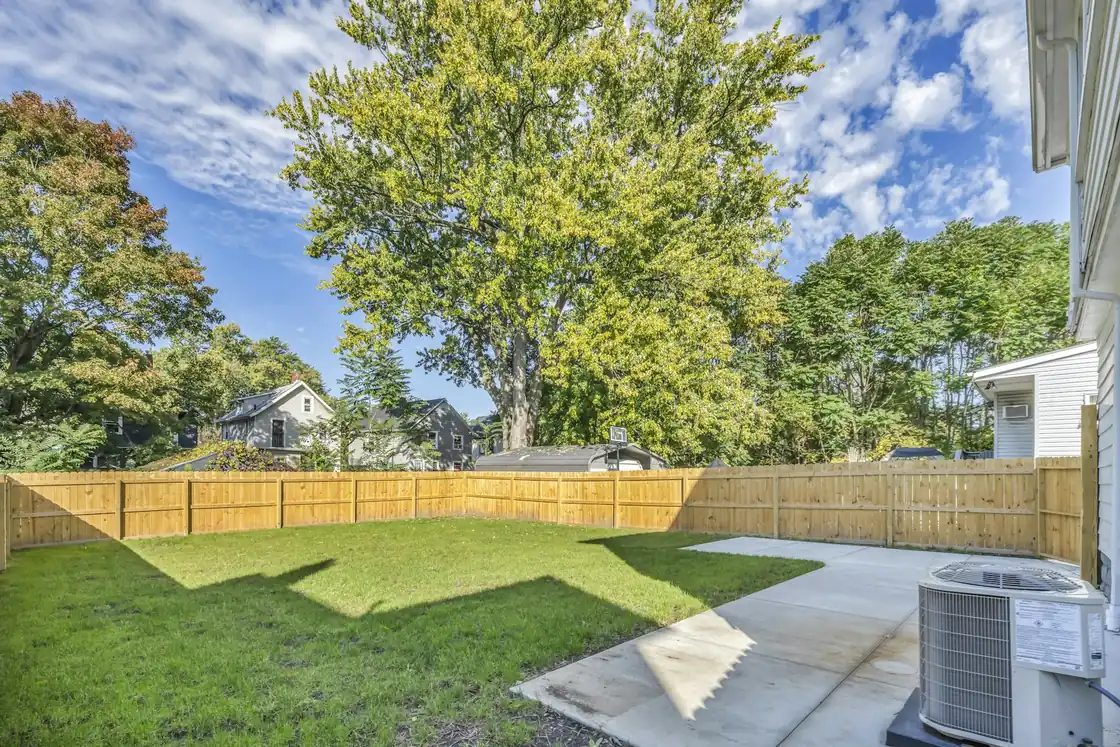
A pad near the old spot is the simplest job. A long line run, a wall bracket or a move to the back yard adds labour.
-
Season
Lowers the price: Spring and fall are easier
In April, May, September and October you get more choice of dates, time to compare quotes and, sometimes, off-season pricing.
Worked examples: how the extras add up
Each example starts from a typical range and adds the extras that apply, using the add-on ranges on our pricing methodology page.
| Scenario | Base range | Extras | Typical total |
|---|---|---|---|
| Straight swap: 2-ton standard AC, new matched coil, line set and disconnect reused | $3,800 to $7,000 | None | $3,800 to $7,000 |
| Standard AC plus a condensate pump and a new thermostat | $3,800 to $7,000 | Pump $150 to $350, thermostat $150 to $600 | $4,100 to $7,950 |
| Variable-speed AC with duct changes for a hot upstairs | $6,500 to $10,500 | Ductwork $500 to $3,000+ | $7,000 to $13,500+ |
| First-time central air in a house with a full electrical panel | $3,800 to $7,000 | Ductwork $500 to $3,000+, panel upgrade $2,000 to $4,500 | $6,300 to $14,500+ |
A plus sign marks open-ended work. A new circuit and any permit ($75 to $300 where required) are extra.
Newer refrigerants and your quote
New central air conditioners sold in Canada are moving from R-410A to refrigerants with a lower global warming potential, most often R-454B or R-32. The manufacturer picks it, but it shapes the job:
- The indoor coil gets replaced. A coil built for R-410A is not matched to a condenser that uses a newer refrigerant.
- The line set may stay. A sound, correctly sized line set can often be reused after a pressure test, within the manufacturer's rules.
- There may be a leak sensor. Some systems add a refrigerant sensor at the coil that tells the furnace blower to run if it detects a leak.
- Your current AC can still be repaired. R-410A remains available for servicing, but shrinking supply tends to push recharge prices up.
Central air or a heat pump?
A heat pump is an air conditioner that also runs in reverse to heat. A ducted cold-climate heat pump cools like central air and covers much of your heating, for $9,000 to $18,000 installed. Paired with a gas furnace for deep cold, it is called dual fuel ($11,000 to $20,000 with a new furnace). See heat pump prices.
| What differs | Central AC | Ducted heat pump |
|---|---|---|
| Typical installed price | $3,800 to $10,500 | $9,000 to $18,000 |
| Heats the house | No | Yes, with a furnace or electric backup for the coldest days |
| Heat pump rebates | No: a cooling-only AC is not a rebate measure | May qualify, with approval before installation |
| Electrical | A replacement reuses the existing circuit | May need a larger circuit or panel work |
| Best fit | A younger furnace, and cooling is all you want | An old AC, and you want to burn less gas |
Rebates go to heat pumps, not to central air
Ontario's Home Renovation Savings program offers rebates on eligible heat pumps, with amounts that depend on how the home is heated now. A cooling-only air conditioner is not a heat pump rebate measure. Approval is required before installation and programs change, so confirm the rules before you sign. See Ontario heat pump rebates.
Sources
- Home Renovation Savings: heat pumps checked October 4, 2026
- Home Renovation Savings: terms and requirements checked October 4, 2026
No ducts?
Houses heated by radiators or electric baseboards have no ducts to carry cooled air. A ductless mini-split cools (and heats) room by room without them: $3,500 to $6,500 for one zone and $9,000 to $18,000 for three to five indoor heads. See ductless mini-split prices.
Replacing the AC and the furnace together
The coil sits on the furnace and the furnace blower moves the cooled air, so the two work as one system. If your furnace is 15 or more years old, price both: one job typically costs $8,000 to $15,000 and avoids fitting a new coil to a furnace you will soon replace. A variable-speed condenser also needs a variable-speed furnace blower to deliver its rating. Compare furnace and AC combo prices and furnace prices.
When to buy
- Spring, before the first heat wave. April and May bring open dates and time to compare quotes.
- Early fall. September and October suit a planned replacement, especially with a furnace; see the best time to buy a furnace.
- Not in a July breakdown. In the first hot spell installers are booked solid, so price an old, struggling unit in spring.
- Cold-weather installs need a follow-up. On a cold day the refrigerant charge is usually set by weight and should be checked once it is warm. Ask whether that visit is included.
Repair or replace your air conditioner?
- Capacitor$150 to $350
- Contactor$150 to $350
- Refrigerant leak repair and recharge$400 to $1,500
- Condenser fan motor$400 to $800
- Compressor$1,800 to $3,500
Capacitors and contactors are cheap, common failures and an easy fix on a healthy unit. Low refrigerant means a leak, and a top-up without finding it usually buys one season. A failed compressor is the usual turning point: at $1,800 to $3,500 it costs about half as much as a new standard system, so on a unit past about 10 years old, replacement is usually the better spend.
Signs it is time to replace
- The unit is 15 years old or more and the repair is over about $1,000.
- It needs a compressor, or a second refrigerant recharge.
- It still runs on R-22, an old refrigerant that is now scarce and costly to service.
- Your furnace is due too, and a combined job makes sense.
See the AC repair cost guide for fault-by-fault prices, the air conditioner buying guide for choosing a system, and the best air conditioner brands, where the tier matters more than the badge.
Comparing central air quotes
Compare two or three written quotes line by line. One far below the others usually leaves out the coil, the line set or the electrical.
Ask every installer
- What size is the system, and was a CSA F280 load calculation done?
- Is a new indoor coil included, matched to the condenser?
- Will the line set be reused or replaced, and how will it be tested?
- What is the AHRI reference number for the matched condenser, coil and furnace?
- Are the disconnect, circuit, permit and any panel work included?
- Does the refrigerant technician hold an ODP card, and who files the ESA notification for any new electrical work?
- What are the parts and labour warranties, and is the price before or after 13% HST?
In Ontario, new electrical work such as a condenser circuit should be done by a licensed electrical contractor, with a notification filed with the Electrical Safety Authority (ESA).
Central air questions
How much does a new central air conditioner cost in Ontario?
A standard central air conditioner typically costs $3,800 to $7,000 installed in Ontario in 2026, before 13% HST, for a 1.5 to 3 ton system in a home that already has central air. High-efficiency and variable-speed systems run $6,500 to $10,500. First-time installs with ductwork or electrical upgrades cost more.
What size AC do I need for a 2,000 square foot house?
The Southern Ontario rule of thumb, 1 ton per 500 to 700 square feet, puts 2,000 square feet of cooled space at roughly 3 to 4 tons. Many newer, well-insulated homes need less. Count only floors above grade, and ask for a CSA F280 room-by-room calculation before you accept a size.
Is a variable-speed air conditioner worth it in Ontario?
Usually for comfort rather than savings. The cooling season here is short, so the electricity saved is often tens of dollars a year, far less than the extra upfront cost. Variable speed earns its price in homes that feel clammy, have a hot upstairs or need a quiet outdoor unit.
How long does a central air conditioner last?
Many central air conditioners in Ontario last 15 to 20 years, helped by the short cooling season. A dirty outdoor coil, an unrepaired refrigerant leak and an oversized unit that cycles all day shorten that. Past about 15 years, price a replacement before it fails.
Does a new central air conditioner qualify for a rebate in Ontario?
Not on its own. A standalone cooling-only air conditioner is not a heat pump rebate measure under the Home Renovation Savings program. A heat pump, which also cools, may qualify if the equipment and the home are eligible and the project is approved before installation. Programs change, so confirm the current rules before you buy.
Can I replace just the outdoor unit?
Sometimes, but it is rarely the best call. A condenser is rated with a matched indoor coil, and newer refrigerants need a coil designed for them, so most installers replace both. A mismatched pair may not reach its rated efficiency or capacity. If your coil is newer and compatible, ask for the match in writing.
How long does a central AC installation take?
A straight replacement on an existing pad and line set usually takes most of a day. A new line set, a new circuit or first-time central air with duct changes can take one to two days. Ask for the schedule in writing, including any return visit to check the refrigerant charge.