Air conditioner buying guide for Ontario homes
A standard central air conditioner (1.5 to 3 tons, about 14.3 SEER2) typically costs $3,800 to $7,000 installed in Ontario, and a high-efficiency variable-speed system $6,500 to $10,500. The right size, a matched indoor coil and a careful install do more for your comfort than the name on the box.
Central air prices in Ontario
Cooling$3,800to$10,500
Typical installed price, Ontario 2026, all options shown
- Central AC, standard1.5 to 3 ton, about 14.3 SEER2 $3,800 to $7,000
- Central AC, high efficiencyvariable speed $6,500 to $10,500
Installed price in Ontario, before 13% HST ($4,294 to $11,865 with HST). Standard replacement in a detached home with usable ductwork and venting.
On this page
- The short version: eight steps to the right AC
- 1. Size it to the house, not to the old unit
- 2. Pick the efficiency you will actually use
- 3. Match the coil, the furnace and the ducts
- 4. Plan where the condenser goes
- 5. Price a heat pump before you settle on AC
- 6. Buy in spring, not in a heat wave
- 7. Compare quotes on the same scope
- 8. Keep it running
- Questions people ask
The short version: eight steps to the right AC
Start from about one ton per 500 to 700 sq ft, then let a load calculation decide.
Pick the efficiency you will use
Variable speed buys comfort and quiet; in Ontario it rarely pays back on the power bill.
Match the coil, furnace and ducts
A new outdoor unit needs a matching indoor coil and enough airflow from the furnace blower.
Airflow, service access, noise and local rules, in that order.
It cools the same way, also heats, and can qualify for a program a cooling-only AC cannot.
Book before the first heat wave fills every schedule.
Compare quotes on the same scope
Same size, same coil, same extras, in writing.
Filters, a clear condenser and a spring check prevent most no-cooling calls.
1. Size it to the house, not to the old unit
Air conditioners are sized in tons of cooling: one ton is 12,000 BTU per hour. In southern Ontario the rule of thumb is roughly one ton per 500 to 700 sq ft of cooled space. Treat it as a starting range only.
| Cooled area | Rule-of-thumb range | Sizes you will see quoted |
|---|---|---|
| 1,000 sq ft | 1.4 to 2.0 tons | 1.5 or 2 ton |
| 1,500 sq ft | 2.1 to 3.0 tons | 2, 2.5 or 3 ton |
| 2,000 sq ft | 2.9 to 4.0 tons | 3, 3.5 or 4 ton |
| 2,500 sq ft | 3.6 to 5.0 tons | 3.5, 4 or 5 ton |
Newer, well-sealed homes often land at the low end or below. Older homes with lots of west or south glass land higher. A load calculation settles it.
Bigger is not better. An oversized air conditioner cools the air quickly and shuts off before it has pulled much moisture out, so the house feels cool but clammy, and short cycles wear parts faster. Like-for-like can also go wrong if the old unit was oversized or you have since added insulation and new windows. Ask for a room-by-room load calculation, and run your own numbers first with our AC size calculator. Systems above 3 tons usually price toward the top of the standard central air range in the Ontario Furnace Prices index, or above it.
2. Pick the efficiency you will actually use
Efficiency is now published as SEER2, a newer test that gives lower numbers than the old SEER rating for the same equipment: about 14.3 SEER2 is roughly 15 SEER on the old scale. The bigger choice is how the compressor runs.
| Type | Typical installed price | How it runs | Best for |
|---|---|---|---|
| Single-stage, about 14.3 SEER2 | $3,800 to $7,000 | Full power or off. | Tight budgets, mild use, or a house you plan to sell soon. |
| Two-stage | Usually between the two ranges | A low stage most of the time, full power on hot afternoons. | Better humidity control at a moderate premium. |
| Variable speed (inverter) | $6,500 to $10,500 | Adjusts output in small steps to match the load. | Steady temperatures, humidity control and quiet running. Cold-climate heat pumps usually work this way. |
Typical installed prices in Ontario, 2026, before 13% HST.
Be realistic about payback. Take a 2.5-ton system running the equivalent of 500 full-power hours in a summer, an assumption for illustration. At $0.15/kWh, a 14.3 SEER2 unit uses about $157 of electricity a year and an 18 SEER2 unit about $125: a difference of about $32. Double the hours and it is still about $64. Against a gap of roughly $3,100 between the midpoints of the two price ranges, energy savings alone take decades to pay it back. Buy variable speed for comfort, quiet and humidity control, or because you are buying a heat pump anyway.
3. Match the coil, the furnace and the ducts
Central air is two halves. The outdoor condenser holds the compressor; the indoor evaporator coil sits on top of your furnace, and the furnace blower pushes house air across it. The rated efficiency only applies to a tested, matched combination of outdoor unit, coil and furnace. Ask for its AHRI reference number, which you can look up in the AHRI directory.
- Airflow: the blower and ducts need to move roughly 350 to 400 cubic feet of air per minute for each ton. Undersized ducts or an older blower can cap the size of AC your house can use well.
- Refrigerant: new systems are moving from R-410A to lower-impact refrigerants such as R-454B and R-32. A new outdoor unit normally comes with a new matching indoor coil. Ask whether the copper line set is being replaced or reused, and how it was tested.
- Condensate: the coil makes water all summer. It needs a drain, or a condensate pump at $150 to $350 where there is no floor drain nearby.
If your furnace is more than about 15 years old, price both together. A furnace and AC replaced in one job typically costs $8,000 to $15,000, and you get a coil and blower that are matched from day one. See furnace and AC combo prices.
Get a central air price for your home
An in-home estimate checks your ducts, blower and electrical, then gives you a written price for the right size.
Free, no obligation. About a minute to request.
4. Plan where the condenser goes
The outdoor unit needs free airflow on all sides and above the fan, on a level pad or stand, with the clearances listed in the manufacturer's installation manual. Keep it away from dryer vents, and leave room for a technician to work on it. Shade helps a little; open airflow matters far more.
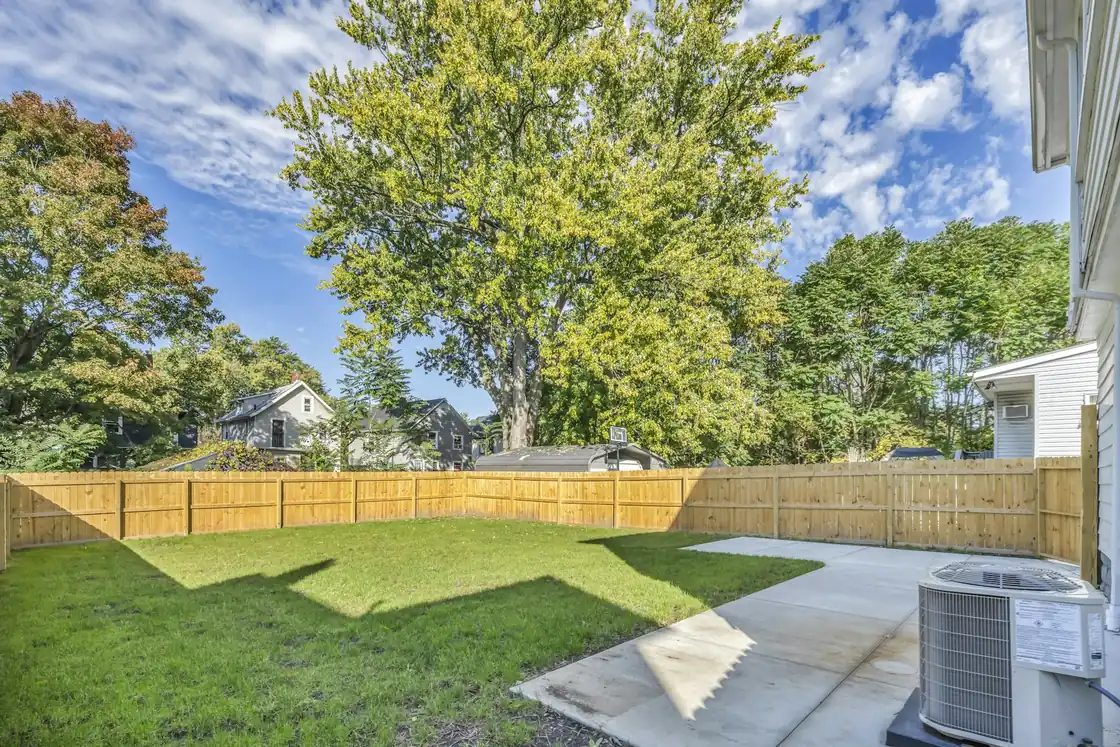
Think about sound too: a condenser under a bedroom window or beside a neighbour's patio is a classic regret, and variable-speed units are quieter because they spend most of their time at low speed. Many Ontario municipalities have zoning or noise rules about where equipment can sit, especially in narrow side yards, so ask the installer to confirm the local rule and any permit before the pad goes down. Replacements usually reuse a correctly sized circuit and disconnect; a first-time install needs a new 240 V circuit.
5. Price a heat pump before you settle on AC
A heat pump cools exactly like a central air conditioner, and it also heats. Even if you keep your gas furnace, a heat pump can carry the house through spring and fall while the furnace handles deep cold: that pairing is called dual fuel.
- Central AC, standard: cooling only
- $3,800 to $7,000
- Ducted cold-climate heat pump: heats and cools
- $9,000 to $18,000
The premium is real, and a heat pump changes the electrical and sizing questions; our heat pump buying guide walks through them. On rebates, the difference is simple: a cooling-only air conditioner is not a heat pump rebate measure under the Home Renovation Savings program terms we checked on October 4, 2026. A heat pump can qualify if the home, the product and the paperwork meet the rules, with approval before installation. Details are on our heat pump rebates page, and programs change, so confirm before you buy.
Sources
- Home Renovation Savings: terms and requirements checked October 4, 2026
6. Buy in spring, not in a heat wave
The best months to buy central air in Ontario are March to May. Installers have openings, you have time to compare quotes, and the system is running and tested before the first hot week. Once a heat wave arrives, schedules fill with no-cooling calls and planned installs wait. The same calendar logic applies to heating; see the best time to buy a furnace.
7. Compare quotes on the same scope
Get two or three written quotes for the same size and the same type of system. If one installer recommends a different size, ask to see the calculation that justifies it.
Questions to ask before you sign
- What size did you calculate for my house, and how? Can I see the load calculation?
- What is the AHRI reference number for this condenser, coil and furnace combination?
- Is the indoor coil new? Is the line set new or reused, and how was it tested?
- Can my furnace blower and ducts move enough air for this size?
- Does the price include the pad, disconnect, electrical, condensate drain or pump, permit and removal of the old unit?
- What do the parts and labour warranties cover, and who registers the equipment?
- Is the price before or after 13% HST?
Brand is the last decision, not the first. Most brands sell a standard and a premium line, and the installer's work matters more than the badge; our best air conditioner brands guide explains the tiers.
8. Keep it running
Most no-cooling calls trace back to a few simple things. Keep up with them and the system lasts longer and runs closer to its rating.
- Check the furnace filter every 1 to 3 months in summer. The AC uses the same blower and filter, and a clogged filter can freeze the coil.
- Keep plants, fences and debris clear of the condenser so it can breathe.
- Rinse the condenser fins gently with a garden hose, power off at the outdoor disconnect. Never use a pressure washer.
- If you cover the unit in winter, cover only the top so moisture can escape.
- Book a spring check: refrigerant charge, electrical parts, coil and condensate drain.
- Register the equipment with the manufacturer after the install; many parts warranties depend on it.
The common failures are inexpensive next to a new system: a capacitor is typically $150 to $350, a contactor $150 to $350. A compressor at $1,800 to $3,500 is where replacement starts to make sense. See AC repair costs for the full list.
Get a Free Quote
8 quick questions, about a minute. Free and without obligation.
You already sent a request during this visit, and our booking team will be in touch. Send another only for a different home or system.
Questions people ask
What size air conditioner do I need for a 1,500 sq ft house?
The southern Ontario rule of thumb of one ton per 500 to 700 sq ft points to roughly 2 to 3 tons for 1,500 sq ft of cooled space. Insulation, windows, sun exposure and ceiling height move it, and a newer, well-sealed house often needs less than the rule suggests. A room-by-room load calculation settles it; our AC size calculator gives you a planning range first.
Is a higher SEER2 rating worth it in Ontario?
Rarely on energy savings alone. Ontario summers are short, so moving from about 14.3 to 18 SEER2 might save a few dozen dollars a year, against a price difference of several thousand. Variable-speed systems earn their keep through comfort: steadier temperatures, better humidity control and quieter running. If efficiency is your goal, consider whether a heat pump, which also heats, fits your plans.
Do I have to replace my furnace when I replace my AC?
No. A new AC can pair with an existing furnace if the furnace blower can move enough air for the new size and the new coil fits. If the furnace is more than about 15 years old, price both together, typically $8,000 to $15,000. One visit and one matched system often costs less than two separate jobs a few years apart.
Are there rebates for central air conditioners in Ontario?
A cooling-only central air conditioner is not a heat pump rebate measure under the Home Renovation Savings program terms we checked on October 4, 2026. A heat pump, which cools the same way and also heats, can qualify if the home, the product and the paperwork meet the rules, with approval before installation. Programs change, so confirm the current terms before you buy.
How long does a central air installation take?
A straightforward replacement that reuses the pad, the circuit and the line route is usually a one-day job. A first-time install takes longer when it needs a new electrical circuit, a new line set through the wall, a condensate drain or duct changes. Ask the installer how long they expect to be on site and whether a permit inspection follows.