Best air conditioner brands in Canada (2026)
Most Ontario homes pay $3,800 to $7,000 installed for a standard central air conditioner of about 14.3 SEER2, and $6,500 to $10,500 for a high-efficiency or variable-speed system, before HST. The staging you choose and how well the system matches your furnace matter more than the brand.
Central air conditioner prices, any brand
Cooling$3,800to$10,500
Typical installed price, Ontario 2026, all options shown
- Central AC, standard1.5 to 3 ton, about 14.3 SEER2 $3,800 to $7,000
- Central AC, high efficiencyvariable speed $6,500 to $10,500
Installed price in Ontario, before 13% HST ($4,294 to $11,865 with HST). Standard replacement in a detached home with usable ductwork and venting.
On this page
Single-stage, two-stage or variable speed
The biggest price decision is not the brand but how the compressor runs. Every major brand sells all three types, and the standard and high-efficiency ranges below match the central air rows on the Ontario Furnace Prices home page.
| Type | Typical installed | How it runs | Best for |
|---|---|---|---|
| Single-stage, about 14.3 SEER2 | $3,800 to $7,000 | Full output whenever it runs; on and off on hot days | Smaller homes and tight budgets |
| Two-stage | $5,500 to $8,500 | A low stage most days, full output in heat waves | Two-storey homes with a hot upstairs; muggy days |
| Variable speed (inverter) | $6,500 to $10,500 | Ramps to match the load in long, quiet cycles | Comfort and humidity control, noise-sensitive yards |
Before 13% HST, standard replacement using the existing coil location and line set route. Two-stage systems straddle our standard and high-efficiency ranges.
Southern Ontario air conditioners work hard for a few weeks and lightly for the rest of the summer, so staging pays back mostly in comfort and humidity control. Energy savings are modest: if your system uses 1,500 kWh in a summer at $0.15 per kWh, that is about $225, and a system using 20% less electricity saves about $45 a year.
What actually differs between AC brands
Compressor and cabinet
Most residential condensers use scroll compressors, and variable-speed units use inverter-driven ones. Many brands source compressors from the same few specialist makers, so the coil, the fan, the controls, the cabinet and the warranty usually distinguish brands more than the compressor does.
Refrigerant and coil
New central air systems are moving from R-410A to lower-impact refrigerants such as R-454B and R-32. Ask which refrigerant the quoted system uses: a new outdoor unit generally needs an indoor coil rated for the same refrigerant.
Sound
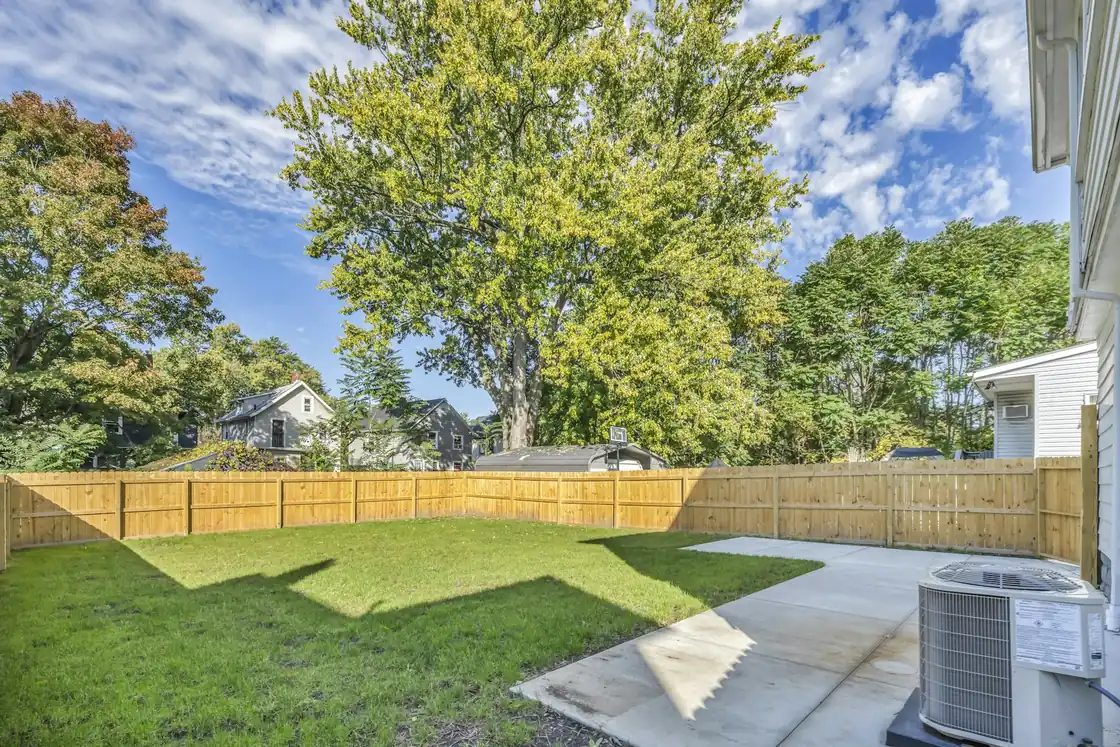
Manufacturers publish a sound rating in decibels for each outdoor model. Variable-speed units are quieter most of the time because they spend most hours at low speed. Placement matters as much as the rating: a unit under a bedroom window or in a narrow side yard between two houses is noticeable.
Warranty
Compressor and parts warranties are commonly 10 years, limited, and often require registration; some premium lines go longer. Labour comes from the installer, and the cost of refrigerant during a warranty repair is not always covered. Read the current certificate for the exact model.
Dealer support
Air conditioners tend to fail in the hottest week of the year, when every contractor is busy. A dealer who stocks parts for your brand, backed by a distributor nearby, shortens the wait. Knowing what common repairs cost also shows what a warranty is worth.
- Capacitor$150 to $350
- Contactor$150 to $350
- Refrigerant leak repair and recharge$400 to $1,500
- Condenser fan motor$400 to $800
- Compressor$1,800 to $3,500
Coil and blower: matching the AC to your furnace
A central air conditioner is two halves: the outdoor condenser and an indoor coil that sits on your furnace, with the furnace blower pushing air across it. The efficiency rating in the brochure applies only to a tested combination of condenser, coil and often the furnace blower.
- Ask for the AHRI reference number of the exact matched system on your quote. It confirms that combination was tested and rated.
- Airflow: as a rule of thumb, cooling needs roughly 350 to 400 CFM of air per ton, so a 2.5-ton system needs about 900 to 1,000 CFM. An older blower or tight return ducts can keep a new AC from reaching its rating.
- Refrigerant: a new R-454B or R-32 outdoor unit generally needs a matching new coil, so budget for one rather than reusing the old coil.
- Variable-speed outdoor units work best with a variable-speed furnace blower and, in some brands, a matching communicating thermostat.
This is the strongest argument for buying the air conditioner from the same brand as your furnace, or replacing both together. A furnace and central air replaced in one job typically costs $8,000 to $15,000; our furnace and AC price guide shows how the combined quote is built.
Get a matched central air quote
A free in-home estimate checks your furnace blower, coil and ductwork, then prices a system that will actually reach its rating.
Free, no obligation. About a minute to request.
The eight major brands for central air
The companies that dominate Ontario furnace quotes also sell most central air conditioners, and their positioning carries over. Within one brand, the gap between its standard and top condenser is usually larger than the gap between two brands at the same tier.
| Brand | Positioning | Family | Matching furnace prices |
|---|---|---|---|
| American Standard | Mid to premium | Sister brand of Trane | American Standard furnace prices |
| Carrier | Mid to premium | Related to Bryant and Payne | Carrier furnace prices |
| Daikin | Mid to premium | Parent of Goodman | Daikin furnace prices |
| Goodman | Value | Owned by Daikin; also builds Amana | Goodman furnace prices |
| Lennox | Premium | Sold through its own dealer network | Lennox furnace prices |
| Rheem | Value to mid | Sister brand of Ruud | Rheem furnace prices |
| Trane | Premium | Sister brand of American Standard | Trane furnace prices |
| York | Mid | Check the warranty certificate for the company behind it | York furnace prices |
Listed alphabetically. Positioning reflects how each brand is commonly marketed, not a quality or reliability score.
When a heat pump is the smarter buy
A heat pump cools exactly like a central air conditioner and also heats. A ducted cold-climate heat pump costs more up front, $9,000 to $18,000 installed against $3,800 to $7,000 for a standard AC, but it can carry your heating through spring and fall, and eligible heat pumps can qualify for the Home Renovation Savings Program with pre-approval before installation (rules checked October 4, 2026; programs change, so confirm before you buy). A cooling-only air conditioner is not a heat pump rebate measure. See heat pump prices and the best heat pump brands for Ontario before you decide.
A heat pump makes sense when
- Your air conditioner and furnace are both getting old
- You heat with electric baseboard, oil or propane
- Your ductwork and electrical panel can take it without major work
- You want to cut gas use in the shoulder seasons with dual fuel
A standard AC may be the better buy when
- Your furnace is new and the budget is tight
- Your electrical panel would need a $2,000 to $4,500 upgrade first
- The heat pump quote depends on major duct changes
- At your gas and electricity rates you would rarely run it for heat
Questions to ask before you sign
- What is the AHRI reference number for this condenser, coil and furnace combination?
- Is it single-stage, two-stage or variable speed, and what is its SEER2 rating?
- Which refrigerant does it use, and does the price include a new coil and line set work?
- What size is it, and how did you calculate that?
- What is the compressor warranty, does it need registration, and will you register it for me?
- How long is your labour warranty, and do you stock parts for this brand in summer?
- What is the outdoor unit's sound rating, and where exactly will it sit?
Comparing furnaces at the same time? The best furnace brands guide uses the same framework for heating.
Questions people ask
What is the best central air conditioner brand in Canada?
There is no public, independent reliability data by brand for Canadian installations, and the major brands overlap heavily in components. Choose the staging you want first, then a dealer who will size the system, match it to your furnace and service it in a heat wave. Within that shortlist, compare warranty terms and price.
Should my air conditioner be the same brand as my furnace?
It is not required, but it is the easiest way to get a tested, rated match between the outdoor unit, the indoor coil and the furnace blower. Mixed brands can work if the combination has an AHRI rating. Communicating control systems need matching brands to work as designed.
Does a premium brand line pay off in an air conditioner?
Mostly in comfort, not on the hydro bill. The premium lines are where the variable-speed systems sit, and those cost $6,500 to $10,500 installed against $3,800 to $7,000 for a standard system. Ontario's cooling season is short, so pick the tier for comfort and pick the dealer for installation quality. Whether variable speed is worth it is weighed in air conditioner prices.
Does the brand affect rebate eligibility?
Not for a cooling-only air conditioner, which is not a heat pump rebate measure under the Home Renovation Savings Program whatever the badge. For a heat pump, eligibility depends on the exact product listing, not the brand name, and pre-approval is needed before installation. Programs change, so confirm the current rules first. Our Ontario HVAC rebates page sets out what qualifies.
Can I reuse my old indoor coil and line set?
The coil usually needs replacing so it matches the new outdoor unit, its rating and its refrigerant. A line set can sometimes be reused if it is the right size, in good condition and passes a pressure test. Ask the installer which parts are being replaced and why, and make sure the quote says so in writing.