Heat pump prices in Ontario (2026)
A whole-home cold-climate heat pump typically costs $9,000 to $18,000 installed in Ontario, and a dual fuel system that keeps a gas furnace as backup $11,000 to $20,000, before HST.
Heat pump prices in Ontario, 2026
Heats and cools$9,000to$18,000
Ducted whole-home heat pump, typical installed price. Dual fuel and ductless below.
- Cold-climate heat pump, ductedwhole home, air source $9,000 to $18,000
- Dual fuel systemheat pump with gas furnace backup $11,000 to $20,000
- Ductless mini-split, single zoneone indoor head $3,500 to $6,500
- Ductless mini-split, multi-zone3 to 5 indoor heads $9,000 to $18,000
Typical installed price in Ontario, before 13% HST. Ducted and dual fuel prices assume a detached home with usable ductwork; ductless prices assume wall-mounted indoor heads. Electrical work and a panel upgrade, when needed, are extra.
On this page
- What each price covers
- Cold-climate vs standard heat pumps
- Ducted, ductless or dual fuel
- What happens to your gas furnace
- Size it for heating, not cooling
- What moves the price
- Electrical and ductwork
- Running cost at Ontario rates
- Heat pump rebates in Ontario
- Questions to ask before you sign
- Questions people ask
- Midpoint, ducted cold-climate heat pump
- $13,500
- Electrical work, when needed
- $500 to $2,500
- Panel upgrade, if the panel is full
- $2,000 to $4,500
- Break-even efficiency against gas at default rates
- COP 3.0
What each price covers
The four ranges are four different jobs, not four brands, so check which one a quote describes before comparing it. The price index on Ontario Furnace Prices puts all four on one scale beside a gas furnace and central air.
Ducted cold-climate heat pump, $9,000 to $18,000. An outdoor unit and an indoor coil on your existing ducts. It replaces central air and does most or all of the heating; in an all-electric setup, an air handler with electric backup strips replaces the furnace. Smaller homes with sound ducts and spare panel capacity sit at the low end. Large variable-speed systems with a new air handler, electrical work and duct changes sit at the top.
Dual fuel, $11,000 to $20,000. A heat pump and a gas furnace installed together, with the furnace taking over in deep cold. If your furnace is fairly new and compatible, an installer may quote only the heat pump side, which costs less. Our furnace prices guide covers the furnace on its own.
Ductless mini-splits, $3,500 to $6,500 for one zone. Indoor heads on the wall and no ducts, which suits boiler homes, baseboard homes, additions and basements. Three to five heads run $9,000 to $18,000; see the mini-split price guide.
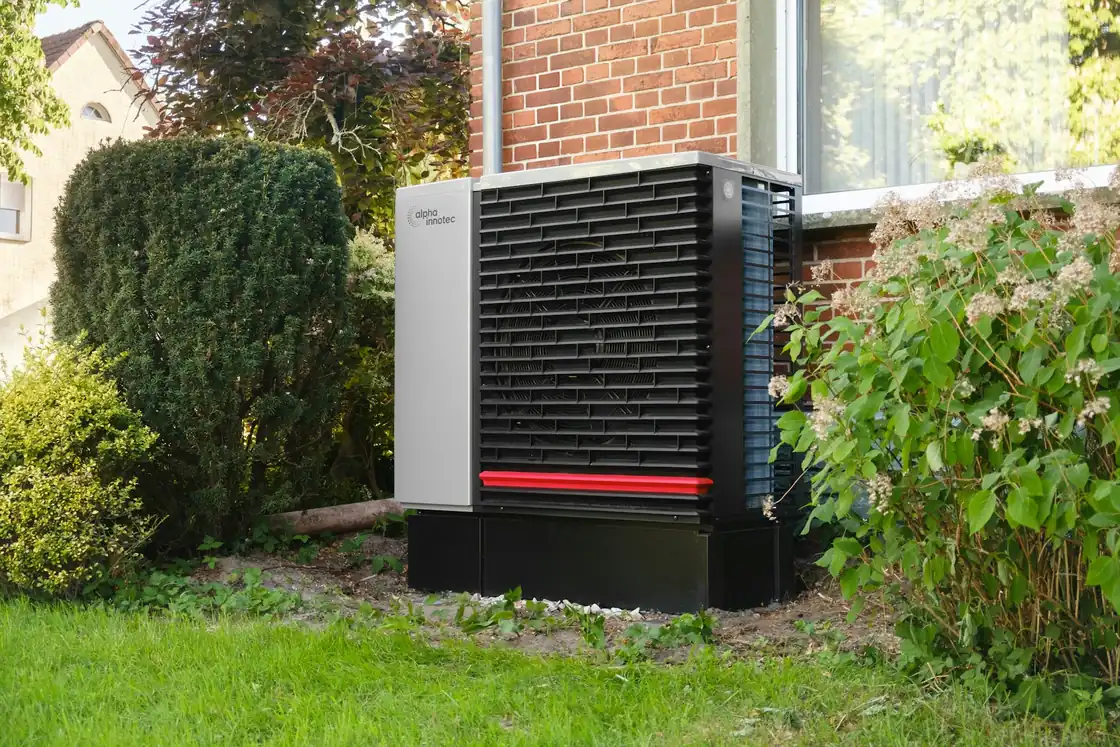
Cold-climate vs standard heat pumps
Every air-source heat pump loses output and efficiency as the air gets colder; what matters is how much. Winter design temperatures across Southern Ontario run from roughly -16°C in Windsor to about -25°C in Ottawa. A standard heat pump, built mainly for cooling and mild winters, can lose much of its output in a cold snap and lean hard on backup heat. A cold-climate model uses a variable-speed inverter compressor designed to keep producing useful heat well below -15°C, and many are rated to keep running at -25°C or lower. The ranges on this page assume cold-climate equipment.
In a 2013 test at its research houses in Ottawa, Natural Resources Canada measured a cold-climate unit's average heating COP (heat delivered per unit of electricity) at about 3.0 at +4.9°C, falling to about 1.5 at -21.1°C. Equipment has moved on since, but the pattern holds: strong in mild weather, weaker in deep cold. When comparing quotes, ask for each system's published capacity and COP at 8.3°C (47°F) and at -15°C (5°F) for the exact indoor and outdoor pairing.
Ducted, ductless or dual fuel
| Setup | Typical installed price | What it replaces | Backup heat | Best fit |
|---|---|---|---|---|
| Ducted cold-climate heat pump | $9,000 to $18,000 | Central AC, and the furnace if you go all-electric | Electric heat strips in the air handler | Homes with sound ducts and room in the panel, especially those leaving oil, propane or electric heat |
| Dual fuel | $11,000 to $20,000 | Central AC; keeps or replaces the gas furnace | Gas furnace | Gas-heated homes that want heat pump heating in mild weather and the furnace for deep cold |
| Ductless, single zone | $3,500 to $6,500 | A window AC, or baseboards in one area | The existing heating stays | One room, an addition or a basement |
| Ductless, multi-zone | $9,000 to $18,000 | Baseboards, or adds cooling to a boiler home | The existing boiler or baseboards | Homes without ducts |
Before 13% HST. Multi-zone prices are for three to five indoor heads.
For a gas-heated home with ducts, dual fuel is the cautious way in: the heat pump carries the mild months and the cooling, and the furnace covers the hours when gas heat is cheaper or the heat pump cannot keep up. For a home on oil, propane or baseboards, an all-electric heat pump has the strongest running-cost case. With no ducts, ductless is usually the practical route. On larger rural lots, also price a ground-source system: steadier efficiency in deep cold and no outdoor unit, but typically $25,000 to $45,000 because of the drilling or trenching. See geothermal heat pump cost.
What happens to your gas furnace
With dual fuel the furnace stays, and the heat pump coil sits on it where the air conditioner coil used to be. A compatible control switches between the two at a switchover temperature you choose, either by cost (below it, gas heat is cheaper at your rates) or by comfort (below it, the heat pump cannot hold the house).
If the furnace is near the end of its life, replacing both in one job usually beats two jobs a few years apart; see how long furnaces last. Removing every gas appliance lets you close the gas account and its fixed monthly charge; keep a gas water heater or stove and the charge stays.
Size it for heating, not cooling
An Ontario home needs far more heating than cooling. Sized like an air conditioner, a heat pump is too small for January and leans on backup heat; sized for winter, a single-speed unit is oversized for summer and dehumidifies poorly. Variable-speed equipment bridges the two.
The furnace rule of thumb of 25 to 45 BTU per hour per square foot is too blunt here, because every extra ton adds cost and short-cycling. Ask for a CSA F280 room-by-room load calculation, the proper sizing method in Canada, and for the share of the design heat loss the heat pump covers at your local design temperature. The heat pump cost calculator gives you a planning estimate first.
What moves the price
-
Heating capacity
Raises the price: Each ton adds cost
Bigger and leakier homes need more capacity. A heat pump sized for heating is often larger than the air conditioner it replaces.
-
Cold-climate equipment
Raises the price: Higher equipment cost
Variable-speed inverter units with published low-temperature capacity cost more than basic single-stage models, and they are what lets a heat pump carry an Ontario winter.
-
Electrical work
Raises the price: +$500 to $2,500
A dedicated 240-volt circuit and an outdoor disconnect, plus a large circuit for backup heat strips in an all-electric system.
-
Panel upgrade
Raises the price: +$2,000 to $4,500
Only when the panel is full or the load calculation says the service is too small. Most likely with an older 100-amp service.
-
Ductwork changes
Raises the price: +$500 to $3,000+
Tight returns or long, undersized runs may need work, because a heat pump moves more air than a furnace.
-
Outdoor unit placement
Can go either way: Labour time
A short, straight line set keeps labour down. A wall bracket or a long, second-storey route adds to it.
-
Timing
Lowers the price: Easier scheduling
Spring and early fall, away from no-heat emergencies, leave time to compare quotes and get rebate pre-approval before work starts.
Electrical and ductwork
A heat pump needs a dedicated 240-volt circuit and a disconnect at the outdoor unit. An all-electric system also needs a large circuit for its backup heat strips, which is where older 100-amp services run out of room. Electrical work typically runs $500 to $2,500, and a panel or service upgrade adds $2,000 to $4,500, usually with a disconnect booked through your local electricity distributor. In Ontario this work needs an Electrical Safety Authority (ESA) permit and a licensed electrical contractor. Ask whether it is in the quote, and mention any planned EV charger now.
- Electrical work for a heat pump$500 to $2,500
- Electrical panel upgrade$2,000 to $4,500
- Ductwork modifications$500 to $3,000+
- New thermostat$150 to $600
- Condensate pump$150 to $350
- Municipal permit$75 to $300
Heat pumps deliver air that is warm rather than hot, so they move more air than a furnace for the same heat. Ducts sized for a small air conditioner can be too tight, which shows up as noise and weak airflow to far rooms. Ask the installer to measure total external static pressure: a quick test that tells you whether the ducts need a bigger return, a few new runs or nothing at all.
What would a heat pump cost in your house?
Electrical capacity, ductwork and the heat load set the real price. A free in-home estimate puts all three in writing, with the equipment named.
Free, no obligation. About a minute to request.
Running cost at Ontario rates
At this site's default rates (gas about $0.50 per m³ all-in from Enbridge, electricity about $0.15 per kWh all-in, and 1 m³ of gas holding about 10.35 kWh), a 96% furnace makes heat for about 5.0¢ per kWh. Heat pump heat costs the electricity price divided by the COP.
| Heat source | Cost per kWh of heat | Relative cost |
|---|---|---|
| Gas furnace, 96% AFUEGas at about $0.50 per m³ | 5.0¢ | |
| Heat pump at COP 4Mild fall and spring weather | 3.8¢ | |
| Heat pump at COP 3About where it matches gas | 5.0¢ | |
| Heat pump at COP 2.5A planning figure for a whole season | 6.0¢ | |
| Heat pump at COP 2Cold weather | 7.5¢ | |
| Heat pump at COP 1.5Deep cold | 10.0¢ | |
| Electric baseboardsResistance heat, COP 1 | 15.0¢ |
Electricity about $0.15 per kWh all-in; gas about $0.50 per m³ all-in (Enbridge, delivery included); 1 m³ of gas holds about 10.35 kWh. The dashed line marks the gas furnace figure. COP values are illustrations, not ratings for any model.
The break-even is a seasonal COP of about 3.0. A cold-climate heat pump beats it in mild weather and falls below it in deep cold, which is what a cost-based dual fuel switchover exploits. Against baseboards, heat pump heat at a COP of 2.5 costs 40% as much. Oil and propane usually cost more per unit of heat than gas, so those homes sit closer to the baseboard case.
| Heating system | Energy used per year | Yearly cost at default rates |
|---|---|---|
| Gas furnace, 96% AFUE | 2,000 m³ | $1,000 |
| Heat pump, seasonal COP 2.0 | 9,940 kWh | $1,490 |
| Heat pump, seasonal COP 2.5 | 7,950 kWh | $1,190 |
| Heat pump, seasonal COP 3.0 | 6,620 kWh | $990 |
| Electric baseboards | 19,870 kWh | $2,980 |
The same heat, about 19,900 kWh, is delivered in every row. Seasonal COP values are planning assumptions, not ratings for any model. Cooling is not included.
Against gas at default rates, a heat pump is close to a wash on running cost, a couple of hundred dollars either way, while the same home on baseboards spends far more. That is arithmetic, not a savings promise: rates change, and real COP depends on the model, the installation and the winter. Try your own numbers in the heating cost calculator.
Heat pump rebates in Ontario
Home Renovation Savings is the main program. As published at our last check (October 4, 2026), it pays per ton for purchased air-source heat pumps, at a rate set by how the home is heated:
- Homes heated by Enbridge natural gas: $500 per ton, up to $2,000.
- Homes heated by electricity, oil, propane or wood on the Ontario grid: $1,250 per ton, up to $7,500.
- Ground-source systems: separate amounts, covered in the geothermal guide.
The per-ton figure uses the heat pump's total rated heating capacity at 8.3°C (47°F). Rentals have separate caps, and replacing an existing heat pump used for space heating is excluded.
Get pre-approval before installation
Pre-installation approval is mandatory, and homeownership, home type and product eligibility rules apply. Payment guidance is about 60 days after post-installation approval. Programs change, so confirm the rules and your eligibility before you sign. We never promise a rebate amount.
A standalone gas furnace or cooling-only air conditioner is not a heat pump rebate measure; in dual fuel, the heat pump is the measure and the furnace is the compatible backup. The Canada Greener Homes Loan closed to new applications on October 1, 2025. Income-qualified households can look at Save on Energy's Energy Affordability Program, which works through its own agents rather than reimbursing private purchases. If your gas utility is not Enbridge, ask the program which category applies. Details: heat pump rebates in Ontario.
Sources
- Home Renovation Savings: heat pumps checked October 4, 2026
- Home Renovation Savings: terms and requirements checked October 4, 2026
- Natural Resources Canada: Canada Greener Homes grant process new Canada Greener Homes Loan applications closed October 1, 2025
- Save on Energy: Energy Affordability Program income-qualified, delivered by official agents
- Natural Resources Canada: cold-climate air-source heat pump assessment, Canadian Centre for Housing Technology published September 2013
Questions to ask before you sign
Bring these to every heat pump quote
- What is the heating capacity at 8.3°C and at -15°C, and what share of my heat load does it cover at our design temperature?
- Did you do a CSA F280 load calculation, and can I have a copy?
- For dual fuel, what switchover temperature will you set, and why?
- Is the electrical work, including any panel upgrade and the ESA permit, in the price?
- Is the model eligible for Home Renovation Savings, and who applies for pre-approval?
- Who on the crew holds the Ozone Depletion Prevention (ODP) card required for refrigerant work in Ontario, and is the company TSSA-registered for any gas work?
To compare equipment, see the best heat pump brands and the heat pump buying guide.
Questions people ask
How much does a heat pump cost in Ontario in 2026?
A ducted cold-climate air-source heat pump typically costs $9,000 to $18,000 installed, before HST. Dual fuel, with a gas furnace as backup, runs $11,000 to $20,000. A single-zone ductless mini-split is $3,500 to $6,500, and a multi-zone system $9,000 to $18,000. Electrical work and a panel upgrade, when needed, are the most common extras on top of those ranges.
Will a heat pump lower my heating bill?
Against electric baseboards, oil or propane, usually yes. Against natural gas, usually not at current rates: heat from a 96% furnace costs about 5.0¢ per kWh at this site's default rates, so a heat pump needs a seasonal COP of about 3.0 just to match it, and a well-installed cold-climate unit in southern Ontario averages closer to 2.5. Your rates and your equipment decide it, so run them in the heating cost calculator.
Can a heat pump heat an Ontario house on its own?
A properly sized cold-climate model can carry most of the winter, and many are rated to run at -25°C or lower. Output and efficiency still drop in deep cold, so all-electric systems include backup heat strips and dual fuel systems keep the gas furnace. Ask what share of your heat load the unit covers at your local design temperature.
Can I add a heat pump to my existing furnace?
Often, yes. That is a dual fuel setup: the heat pump coil goes on the furnace where the air conditioner coil sits, and a compatible control switches between them. The furnace blower and controls must work with the heat pump, so ask the installer to confirm compatibility. If the furnace is old, replacing both in one job may cost less overall.
Do I need a panel upgrade for a heat pump?
Not always. Many homes only need a new 240-volt circuit and an outdoor disconnect, part of the $500 to $2,500 typical for heat pump electrical work. An all-electric system with backup heat strips, or a 100-amp panel that is already full, may need an upgrade at $2,000 to $4,500. A load calculation by a licensed electrical contractor answers it.
Does a heat pump work in a power outage?
No, and neither does a modern gas furnace: its igniter, inducer and blower all need electricity. A heat pump draws much more power than a furnace, so a standby generator big enough to run one is a larger purchase. With dual fuel, a smaller generator can often run just the furnace.